Continue with


National Cardiovascular Network is a multi-site cardiology practice based in Sydney, with cardiologists working across Chatswood, Bankstown and Dee Why on a shared Gentu account. On any given clinic day, a cardiologist might see 10 to 20 back-to-back patients, and every consult generates a letter that needs to go out.
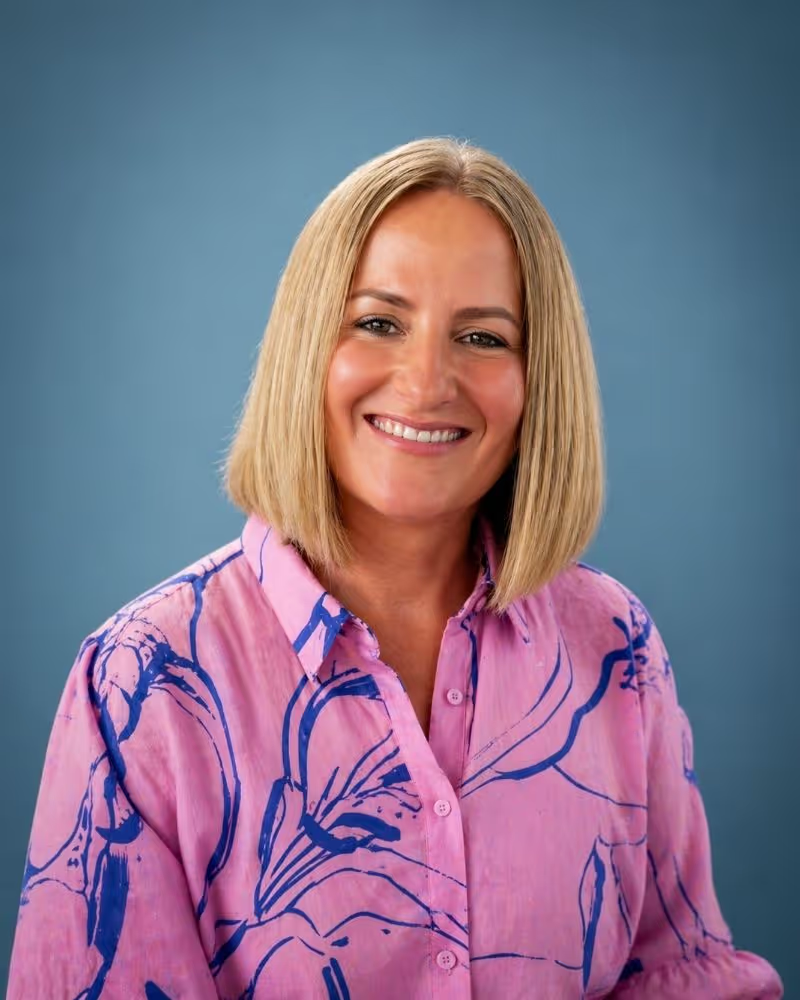
When Angela Hills joined as Practice Manager, Medow was already integrated with Gentu and in use by a small number of cardiologists. What made the story interesting wasn’t the starting point. It was how easily the practice has scaled Medow out from that first user.
Before Medow became the practice standard, National Cardiovascular Network looked a lot like other growing specialist groups: a patchwork of AI scribe trials, a legacy typist service sitting underneath it all, and a practice manager absorbing the overhead.
Cardiologists on the legacy service (NTS Pro) dictated at the end of the day and waited ~24 hours for letters to come back. That meant letters hung around for days before they could be reviewed and sent, creating a visible gap for referring GPs and an invisible tax on the clinician’s evenings.
Drafts returning from the typist service needed reformatting before the cardiologist could even review them. Angela’s weekly rhythm reflected that:
As AI scribe tools proliferated, individual cardiologists began trialling their own solutions. That created the worst of both worlds: no practice-wide standard to train staff on, and no shared benefits across the clinic.
The decision to roll Medow out across the practice came from the top. National Cardiovascular Network’s leadership evaluated the market and chose Medow on the strength of its Gentu integration and the fact that it came in at the same cost as the legacy solution it replaced. From there, the message to clinicians was simple:

This is the software we use. When new doctors onboard with us, they onboard with Medow.
Scaling Medow from a single cardiologist to most of the doctors at the practice didn’t require heroic training efforts. Two things made the growth seamless.
Most cardiologists were fully productive within one to two days of starting to use Medow. Once they logged in and saw the flow (a few clicks, letter drafted, straight into Gentu), the value was obvious.
It only takes them one or two days of using it and then they’ve got it.
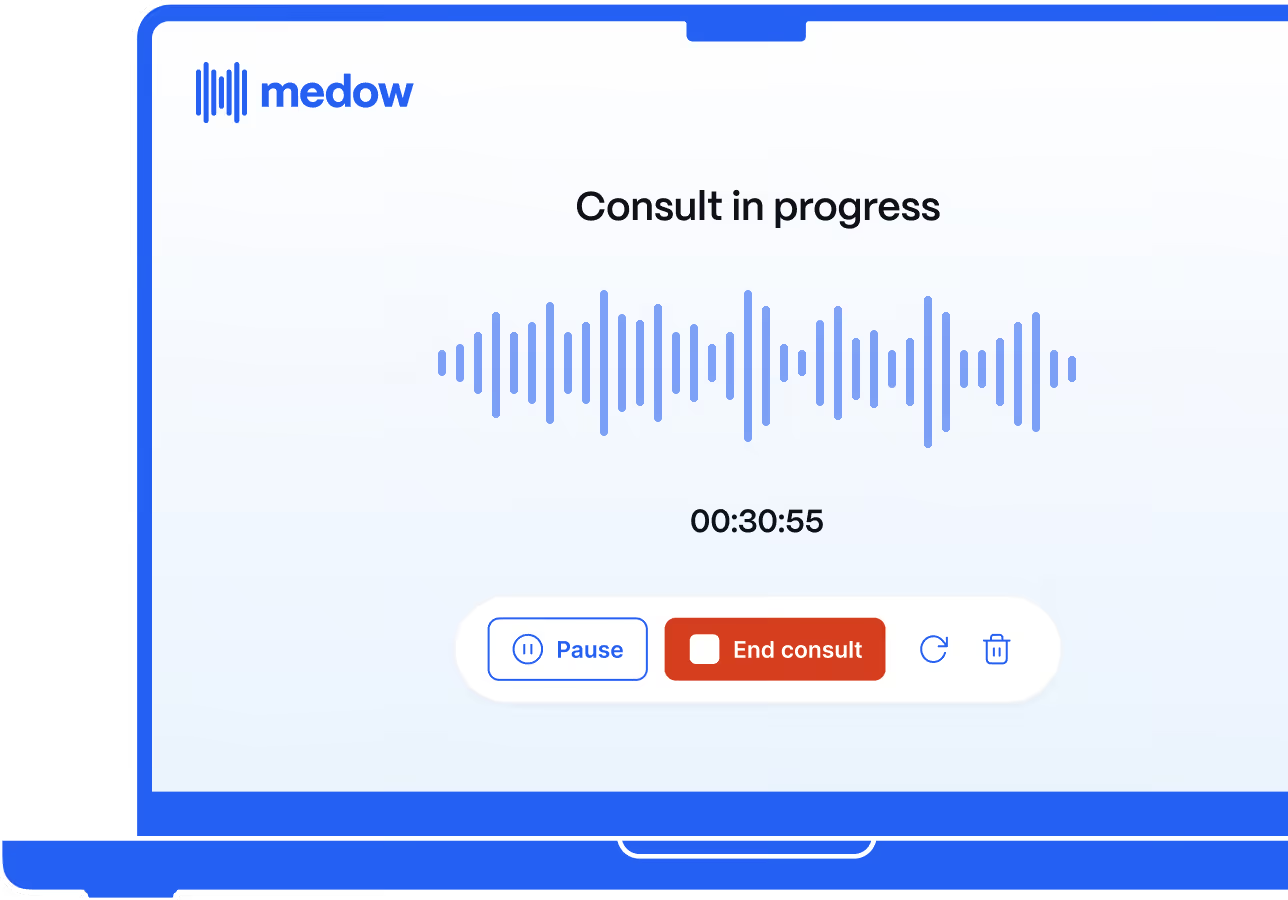
At National Cardiovascular Network, most cardiologists use Medow’s AI scribe, and the rest use smart dictation. Both workflows live in the same platform, so the practice doesn’t have to run parallel systems or train staff on more than one tool. A cardiologist can move between scribe and dictation as preferences change, and the admin experience on the other side stays the same.
Scaling Medow across a practice means scaling the number of occasions a cardiologist or the PM might have a question. Calls haven’t been frequent, but when they have happened, the response has been immediate.
Tara has been very responsive. If we call, or the doctor calls, she pretty much can respond straight away.
The single biggest change cardiologists describe is that their day actually ends when their last patient walks out. Letters are drafted live, reviewed once, and sent. No evening catch-up, no weekend backlog.
Once the patient leaves, their letter is finished. They don’t have to go back and check it. When they leave at the end of the day, their work is done.
The clearest signal of Medow’s impact is the contrast inside Angela’s own week. The two cardiologists still on the legacy typist service consume a full day of her time, every week. Everyone on Medow takes minutes.
Multiplied across 13 cardiologists, that’s the difference between a practice manager buried in document cleanup and one actually managing a practice.
Angela’s message to practice managers still juggling typist services or a patchwork of AI tools is direct:
AI is now the future. You’re going to have to change at some point. The sooner you change over, the quicker and easier the transition will be.
Could every doctor in your practice finish work when the last patient leaves?
Book a demo