Continue with


Last updated: July 2026
Heidi Health and Lyrebird are two of the most widely used AI medical scribes in Australia and New Zealand, built primarily to help clinicians turn consultations into clinical notes faster. Both tools reduce documentation time meaningfully, but they were designed with general practice in mind.
Specialist clinics have different requirements: longer consults, more structured outputs, complex referral letters, and practice management systems (PMS) built specifically for private practice. That gap is where Medow Health positions itself. This comparison breaks down how all three platforms perform across the criteria that matter most to specialist doctors and their teams.
This article compares Heidi Health, Lyrebird, and Medow Health to help clinicians choose the right AI medical scribe for their workflow. We examine how each platform handles clinical documentation, integrations, and note generation to understand which solution is best suited for individual clinicians, growing practices, and healthcare teams.
All three platforms record consultations, transcribe the conversation, and generate structured documentation. The differences that matter for specialist clinics come down to four areas: the AI model behind the output, the depth of practice management integrations, the types of documents produced, and the level of setup support provided.
Key differences include:
Heidi and Lyrebird both use general-purpose medical AI models that work across a wide range of specialties and clinical settings. Heidi reports coverage across many specialties through template customisation and workflow adaptation, but it is one model adapting to many contexts, not a purpose-built model per specialty.
Medow takes a different approach entirely. Each specialty has its own dedicated AI model, trained with the clinical reasoning hierarchy, terminology, tone of voice guide, and documentation structure specific to that field and that doctor. The output isn't a generalist model that has been prompted to think like a cardiologist and to estimate what you sound like— it's a model that was built for cardiology from the ground up with your actual voice and wording.
In practice, this means Medow outputs are structured the way specialists actually write: with the right clinical hierarchy, relevant investigations included, and formats documents with your personal preferences for GP letters, referral letters, patient-facing letters, and operation reports.
Heidi and Lyrebird are strong at generating consult notes and SOAP summaries. Both can produce letters and referrals, but their primary use case is note-taking.
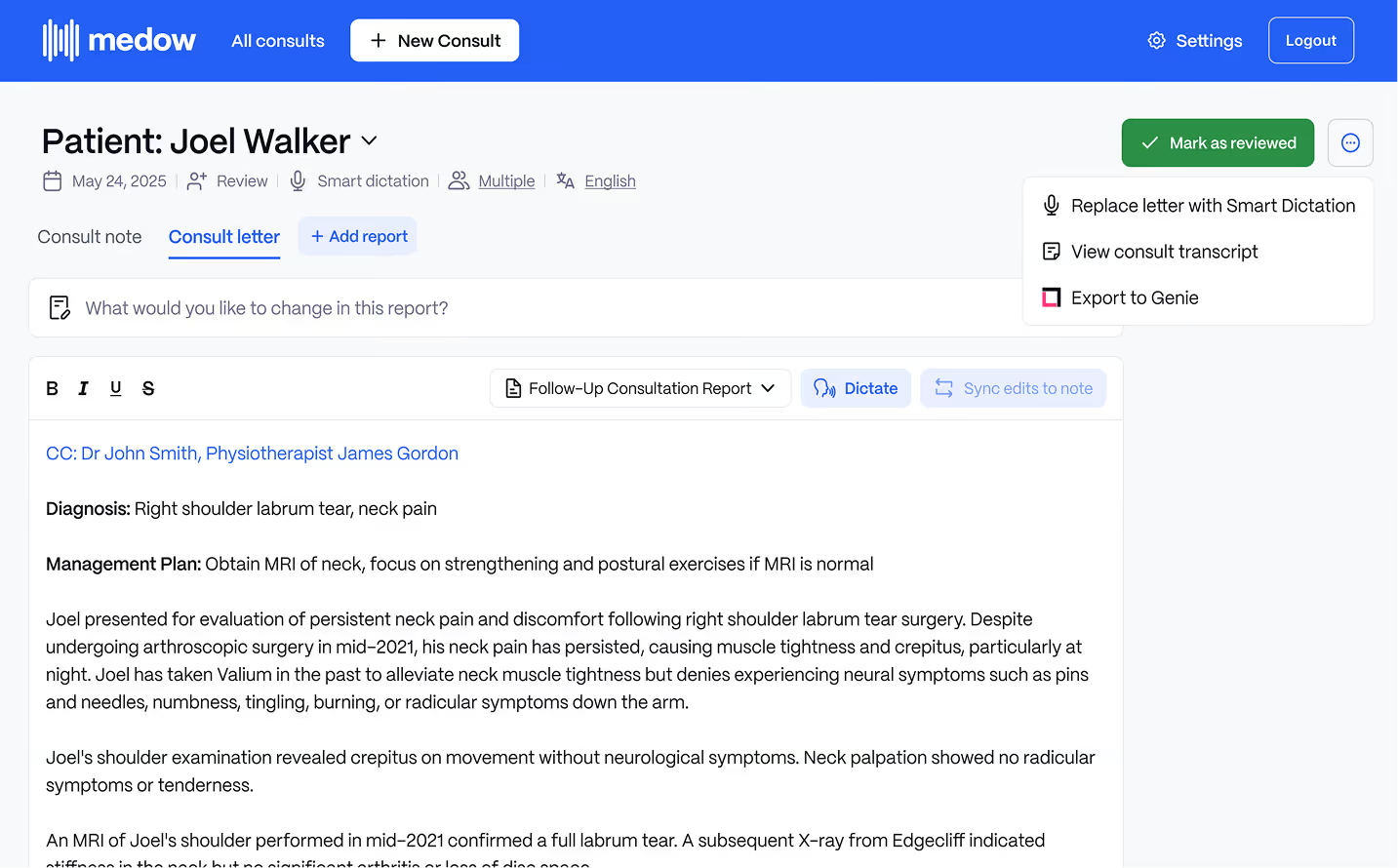
Medow is built around the full documentation workflow that specialist clinics run: consult notes, GP letters, referral letters, patient letters, and operation reports, all generated from recorded consults and structured to the doctor's preferences. Letters are ready for review in under a minute, with anti-hallucination checks ensuring that what appears in the letter strictly reflects what was said in the consult — nothing added, nothing inferred.
This is where the platforms diverge most significantly for specialist clinics.
Heidi integrates with various systems such as Best Practice and MediRecords in Australia, and has been expanding into US-focused EHR systems.
Lyrebird has invested seriously in GP integrations. Their Pro plan includes native connections to Best Practice, Cubiko, and BetterConsult, and more with patient context (medications, allergies, history) flowing into the consult workflow. This is strong coverage for general practice.
Medow's integrations are built specifically for specialist and hospital workflows. Bi-directional API connections with Genie, Gentu, Elixir, and Meditech mean appointments, patient demographics, and completed documents sync automatically — Genie every 10 minutes, Gentu minute-to-minute. Hospital doctors can search patients by room number and push notes directly into Meditech. There is no manual re-entry, and no widget overlay sitting outside the PMS — it syncs inside the workflow.
Heidi and Lyrebird are designed for self-serve onboarding. Clinicians sign up, trial the platform, and configure their own templates and workflows. This works well for individual GPs and small practices who want to get started quickly.
Medow operates a local customer success team that configures templates, tone, letterhead, and integrations before go-live. The system is set up to produce outputs that sound like the doctor from day one, not after weeks of self-training. Post-launch, the team continues to refine outputs based on feedback. For specialist clinics where documentation standards are high and clinical time is valuable, this difference in setup approach has a direct impact on time-to-value.
AI medical scribes are becoming increasingly common as clinics look for ways to reduce documentation time and allow clinicians to focus more on patient care. Tools like Heidi Health and Lyrebird aim to automate clinical note-taking by turning consultations into structured documentation.
However, many clinicians searching for “Heidi vs Lyrebird” are not only comparing those two tools. They are often trying to understand what other AI medical scribe platforms exist and which option best fits their workflow, specialty, and practice setup.
That’s why this comparison also includes Medow. While Heidi Health and Lyrebird are widely discussed AI scribing tools, Medow is another platform designed to support clinical documentation workflows for healthcare teams.
By comparing Heidi Health, Lyrebird, and Medow side-by-side, clinicians can better understand the differences between these AI medical scribe platforms and determine which solution may suit their practice.
For specialist clinics in Australia wanting a deeper evaluation framework, our guide to AI medical scribes covers what to look for before making a decision.
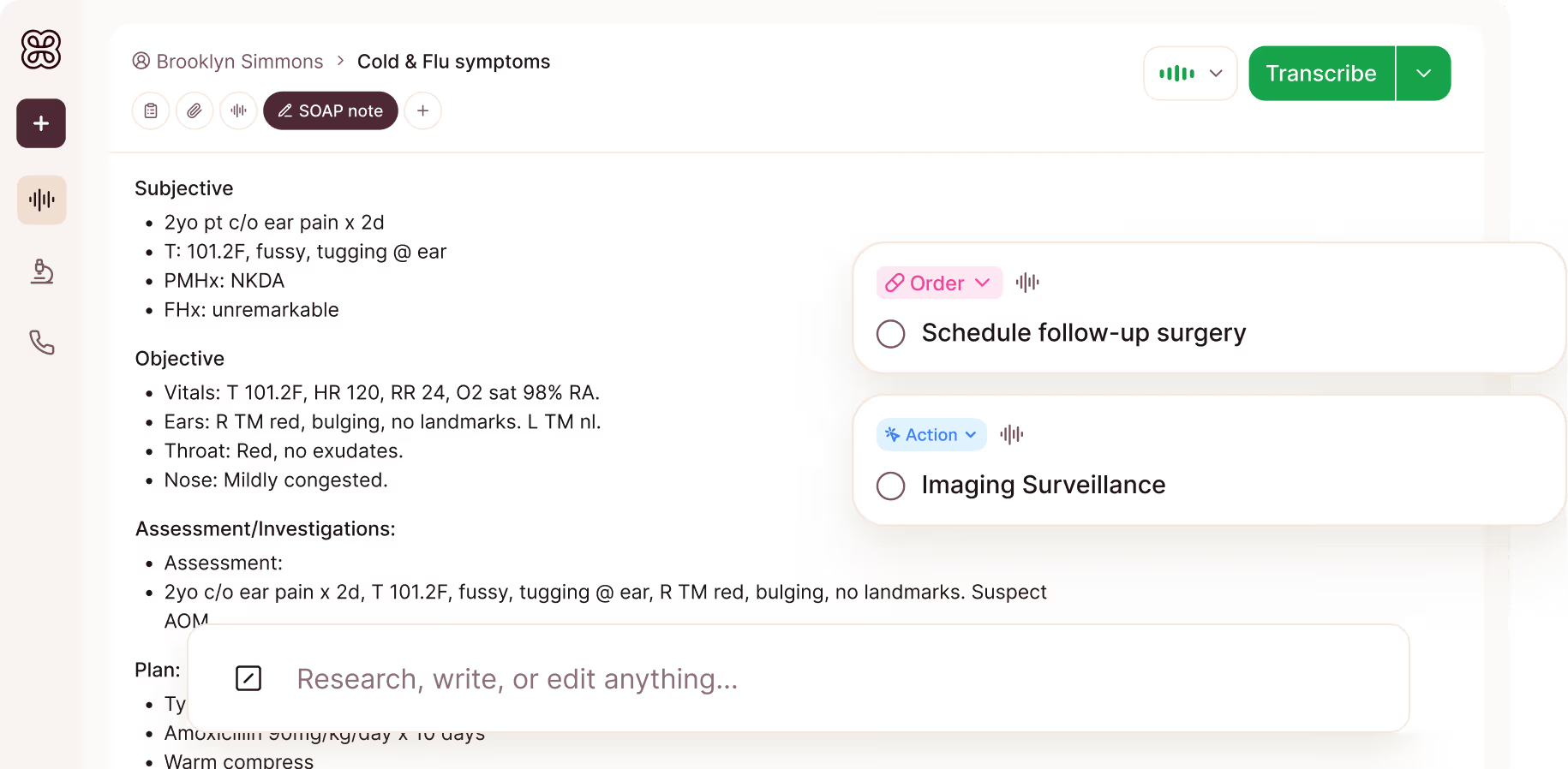
Heidi Health is an AI medical scribe founded in Australia in 2019, now operating in over 116 countries and focusing on the US as their biggest market. The platform listens to consultations and generates structured clinical documentation (notes, letters, summaries) using a general-purpose medical AI model that adapts to different clinical contexts through templates and workflow configuration. Heidi has scaled rapidly: the platform supports over 2 million consults per week globally and raised $65 million USD in Series B funding in late 2025 at a valuation of $465 million. It is a serious, well-funded option.
That said, Heidi's approach to specialist coverage is simple template-based customisation rather than specialty-trained AI. Clinicians can configure how notes are structured for their specialty, but the underlying model is the same across all contexts. For many specialists, this works adequately. For those who need clinically structured outputs without significant self-configuration, the distinction matters.
The free tier allows clinicians to experiment with AI documentation before upgrading. Heidi offers both annual and monthly billing on its paid plans, with the monthly option priced higher than the annual rate.

Lyrebird Health is an Australian AI medical scribe founded in 2023, initially built for general practitioners and now expanding into specialist and hospital settings. The platform captures consultations, transcribes the conversation, and generates structured notes and documents that clinicians can review and push into their PMS. Lyrebird's primary market and deepest integrations are in Australian general practice, particularly through Best Practice Software, where Lyrebird is embedded as a native scribing tool. Lyrebird describes itself as designed for 'anyone in healthcare who documents interactions', and its AI adapts to edits over time. Like Heidi, it uses a general-purpose model that learns the doctor's style through feedback, but it does not use specialty-specific AI models. For APAC GPs, it's a strong, well-integrated option.
Lyrebird Health lists the following pricing tiers on its website:
The free tier allows clinicians to trial the platform before upgrading to paid features.

Medow Health is an AI clinical documentation platform built specifically for specialist doctors in private practice and hospital settings. Where Heidi and Lyrebird use a general-purpose AI model that adapts to different contexts, Medow deploys a dedicated AI model for each medical specialty, trained with the clinical reasoning hierarchy, specialist dictionary, and documentation structure specific to that field.
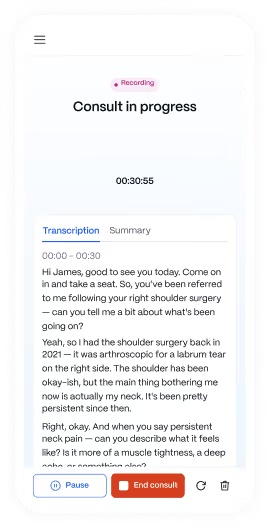
The platform records consultations, transcribes the conversation with speaker identification and low-confidence word flagging checked against medical specialist dictionaries, and generates the full range of documentation that specialist clinics produce: consult notes, GP letters, referral letters, patient letters, and operation reports. Before any output is finalised, anti-hallucination checks verify that the generated content strictly reflects what was said — no conclusions added, no inferences made.
Medow's integrations are built for the APAC specialist PMS landscape. Bi-directional API connections with Genie, Gentu, Elixir, and Meditech mean the platform sits inside existing clinical workflows rather than alongside them. Hospital doctors can search patients by room number and push notes directly into Meditech for real-time documentation during rounds.
Unlike the self-serve model offered by most AI scribes, Medow provides a local customer success team that configures templates, tone, letterheads, and integrations before go-live. The system is calibrated to produce outputs that reflect the individual doctor's voice and preferences from the first consultation — not after weeks of self-training.
Medow does not publish pricing publicly. Clinics are asked to book a demo, which provides a personalised quote based on the usage and needs of the practice, factoring in specialty, and clinic size. A short call is often faster than spending hours exploring the platform and trialing it to establish the right fit. Contact Medow directly to request a quote.
The most important question for specialist clinicians evaluating AI documentation tools is not how fast the notes generate — it's how well the system understands the way specialists think, document, and communicate.
Heidi and Lyrebird both approach this through general-purpose AI with template customisation. Heidi allows clinicians to build custom templates for their specialty, and the model learns documentation preferences over time. Lyrebird adapts to edits the clinician makes, gradually improving its outputs to match individual style. These are legitimate approaches, and for many clinicians, they deliver real value.
The limitation is that no amount of template customisation teaches a generalist model how a cardiologist thinks differently from a rheumatologist when writing a referral letter. Clinical hierarchy — what information matters most, in what order, with what level of detail — is specialty-specific knowledge. Medow's specialist models are trained on this hierarchy per specialty, which is why the outputs require less editing and less correction to match the documentation standards of specialist practice.
For GPs and allied health clinicians, Heidi and Lyrebird are strong options. For specialist doctors whose letters go to GPs and other specialists, and whose documentation needs to reflect the structured reasoning of their field, the gap between a specialist-trained model and a well-prompted generalist model is meaningful.
When evaluating an AI medical scribe, one of the most important considerations is how the tool fits into the clinical workflow during and after a consultation.
Most AI scribes follow a similar high-level process. The system listens to the consultation, transcribes the conversation, and then generates structured clinical documentation that the clinician can review before saving it to the patient record.
However, the way each platform handles this process can differ.
The clinician starts a session, Heidi records and transcribes the consultation, and generates structured notes or documents at the end. The clinician reviews, edits where needed, and either exports or copies into their clinical system. For clinics using Best Practice or MediRecords, integration and others are available on paid plans. For specialist PMS systems, documentation is typically completed outside the PMS and entered separately.
Similar flow to Heidi: record, transcribe, generate, review, push to PMS. For Best Practice users, Lyrebird runs natively inside the software, with patient context pre-loaded. For Genie and Gentu users on the Pro plan, integration is available. For Elixir or hospital EMR users, Lyrebird does not currently offer a native connection.
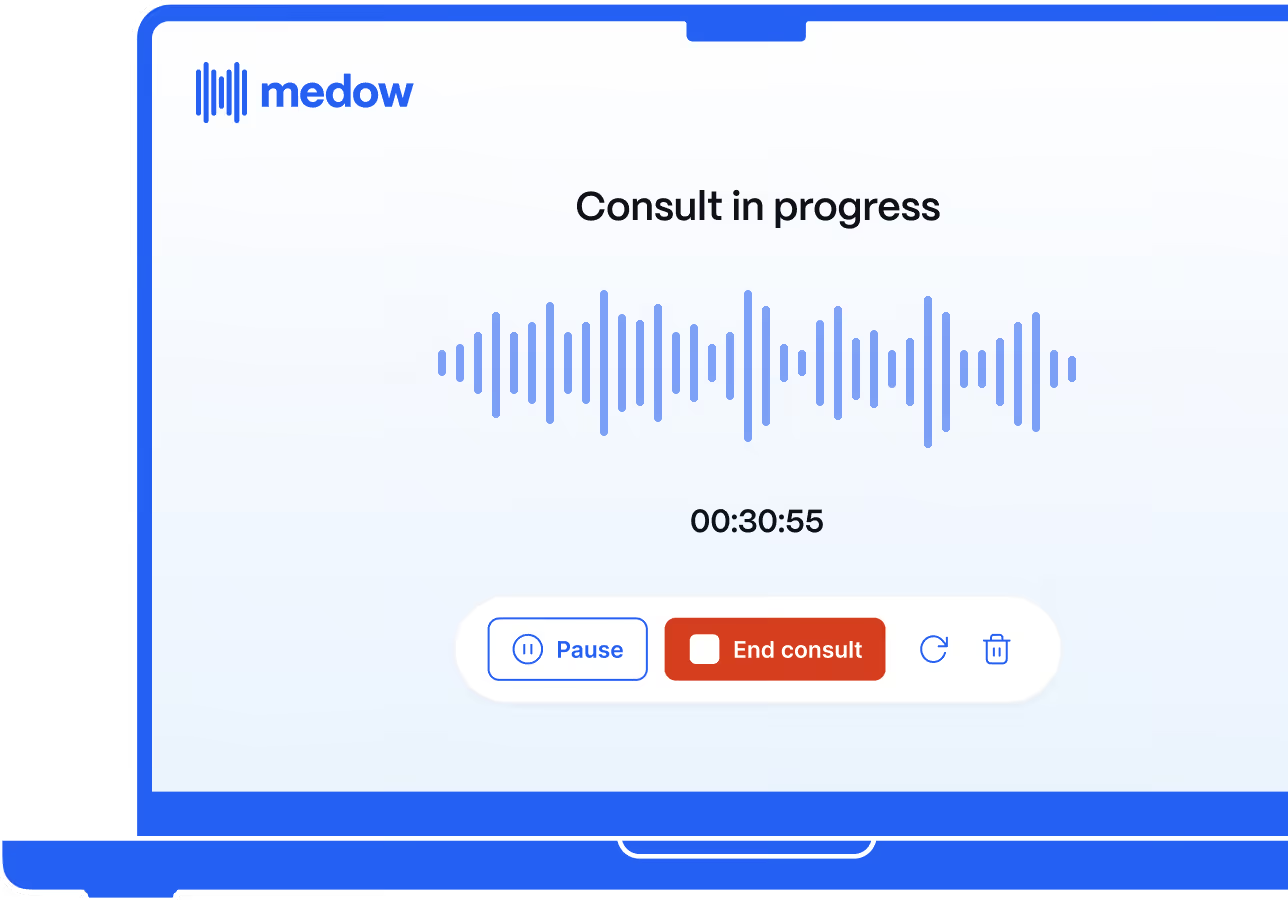
Medow records the consult with ambient audio, distinguishes speakers, and flags any low-confidence transcription for clinician review. The doctor adds context via the Context Panel if needed, like prior history, sensitive information, or detail they want structured into the output.
Generated documents are reviewed and approved via a 'Mark as Reviewed' action that simultaneously syncs the letter or report into the connected PMS or EMR. For Gentu users, this sync happens minute-to-minute. For Genie users, every 10 minutes. Hospital doctors using Meditech can search by room number and push notes into the EMR in real time during rounds.
Another important factor when choosing an AI medical scribe is how well the platform integrates with existing PMS and electronic medical records (EMR).
Many clinics rely on software such as Genie, Gentu, Elixir, or hospital systems like Meditech to manage appointments, patient records, and documentation. If an AI scribe does not integrate well with these systems, clinicians may need to manually copy notes or documents into the patient record, which reduces the efficiency benefits of automation.
Heidi integrates with Best Practice and MediRecords in Australia, and has EHR integration available as an add-on feature on paid plans. For clinics using specialist PMS platforms — Genie, Gentu, Elixir — or hospital systems like Meditech. Clinicians on these systems typically complete documentation in Heidi and manually enter it into their PMS.
Lyrebird's Pro plan includes integrations with Best Practice, Genie/Gentu, Cubiko, and BetterConsult. For Best Practice users, this is deep native integration: patient context including allergies, medications, and history flows into the consult workflow.
Lyrebird is moving into specialist and enterprise settings, but its strongest integrations remain in GP workflows. Elixir is not in Lyrebird's published integrations. Elixir — the specialist PMS used widely in New Zealand — is not listed among Lyrebird's current integrations.
Medow's integrations are built specifically for the APAC specialist and hospital PMS landscape. Bi-directional API connections with Genie, Gentu, Elixir, and Meditech allow appointments, patient demographics, and completed documents to sync automatically without manual re-entry. Unlike widget overlays or partial integrations, Medow's integration is embedded in the workflow: letters and reports sync directly into the patient record once approved. For hospital doctors, the Meditech integration supports real-time documentation during ward rounds, with notes searchable by room number.
Clinicians searching for alternatives to Heidi or Lyrebird are typically looking for one of three things: documentation that better reflects specialist clinical reasoning, deeper integration with their specific PMS, or a platform that doesn't require significant self-configuration before it produces useful output.
Heidi and Lyrebird are strong tools for what they were built for: reducing the time GPs and individual clinicians spend on note-taking. Both are legitimate choices for primary care settings and will deliver real time savings.
For specialist clinics, the evaluation criteria shift. The documentation requirements are more complex, because referral letters and operation reports need to reflect the clinical reasoning of the specialty, not just summarise what was said. The PMS landscape is different — Elixir, Genie, and Gentu require specialist-grade integration. And the standard for accuracy is higher, because letters go to referring GPs and other specialists who will read them in detail.
Medow is built specifically for this context. The specialist AI model means less editing, not just faster generation. The bi-directional PMS integration means documentation enters the patient record automatically, not manually. The local customer success team means the system produces specialist-grade outputs from day one, not after weeks of self-configuration. And the anti-hallucination layer means clinicians can review and approve with confidence that what appears in the letter reflects what was actually said.
For practices primarily looking for lightweight AI note-taking, Heidi or Lyrebird may be sufficient. For specialist clinics where documentation quality and workflow integration are non-negotiable, Medow positions itself as the more complete solution.
The right AI medical scribe depends largely on how complex your documentation workflow is and how your clinic operates.
Some clinicians simply want a tool that helps generate notes faster after consultations. Others need a platform that can support structured documentation, referral letters, and integration with existing clinical systems.
Here is a quick way to think about the differences.
If you’re a specialist and you want the best AI medical scribe, then accuracy, integrations and real human support are very important.
If that sounds like you, book a demo to see how Medow is the best option for specialists.
1. RACGP, General Practice: Health of the Nation 2025 — nearly seven in 10 GPs report burnout, with the majority dissatisfied with their hours, administrative burden, and time spent on care not funded through Medicare.
Link: https://www.racgp.org.au/health-of-the-nation-2025/executive-summary
2. RACGP, Artificial intelligence (AI) scribes fact sheet (updated June 2026) — identifies reducing clinicians’ administrative and documentation burden as the most common problem AI scribes address, and advises checking where scribe data is processed or stored relative to Australia.
Link: https://www.racgp.org.au/running-a-practice/technology/artificial-intelligence-ai/artificial-intelligence-ai-scribes
Yes. Heidi offers a permanent free plan that includes unlimited transcription and basic note generation. However, advanced features (including custom templates, Ask Heidi prompts, and document sharing) are capped at 10 uses per month on the free tier. For clinicians seeing a full day of patients, these limits are reached quickly. Paid plans start at approximately $99 per user per month, on an annual billing contract.
Both are AI medical scribes that record consultations and generate clinical notes. The main differences are in their integration ecosystems and primary target markets. Heidi has broader international reach and a generous free tier; Lyrebird has deeper GP-focused integrations in Australia (particularly Best Practice) and competitive APAC pricing. Neither uses specialty-specific AI models — both adapt a general-purpose model through templates and user feedback.
The answer depends on what 'best' means for your clinic. If you need a quick start with basic note generation and are on Best Practice or Genie/Gentu, Lyrebird is a strong GP-oriented option. If you want international reach, a free trial, and template-based flexibility, Heidi is worth evaluating. If you run a specialist clinic and need AI trained specifically for your field, letters and referrals that reflect specialist clinical reasoning, deep APAC specialist PMS integration (Genie, Gentu, Elixir, or Meditech), and a local team to configure your outputs before launch — Medow is built for exactly that context.
Three things separate Medow from general-purpose AI scribes. First, dedicated AI models per medical specialty. It’s not a single model adapted through templates. Second, anti-hallucination validation that ensures generated letters strictly reflect the transcript, with no AI-added conclusions. Third, a local customer success team that configures the platform to each doctor's voice and preferences before go-live. For specialist clinics where documentation standards are high and PMS integration is essential, these differences translate to less editing, fewer errors, and faster time-to-value.
Honestly, yes — if you have the time, trialling more than one tool is a sensible way to choose. Heidi and Lyrebird both offer free tiers and are quick to set up, so they are easy to test. The main thing to weigh is what your clinic actually needs day to day. If you are a GP or allied health clinician who mainly wants faster consult notes, either may be a good fit. If you are a specialist whose letters and reports need to reflect your specialty’s clinical reasoning, your PMS is Genie, Gentu or Elixir, and you want the system configured to sound like you before go-live, that is where Medow is purpose-built and a self-serve GP or allied health tool will show its limits. The quickest way to see the difference for your specialty is to book a demo.