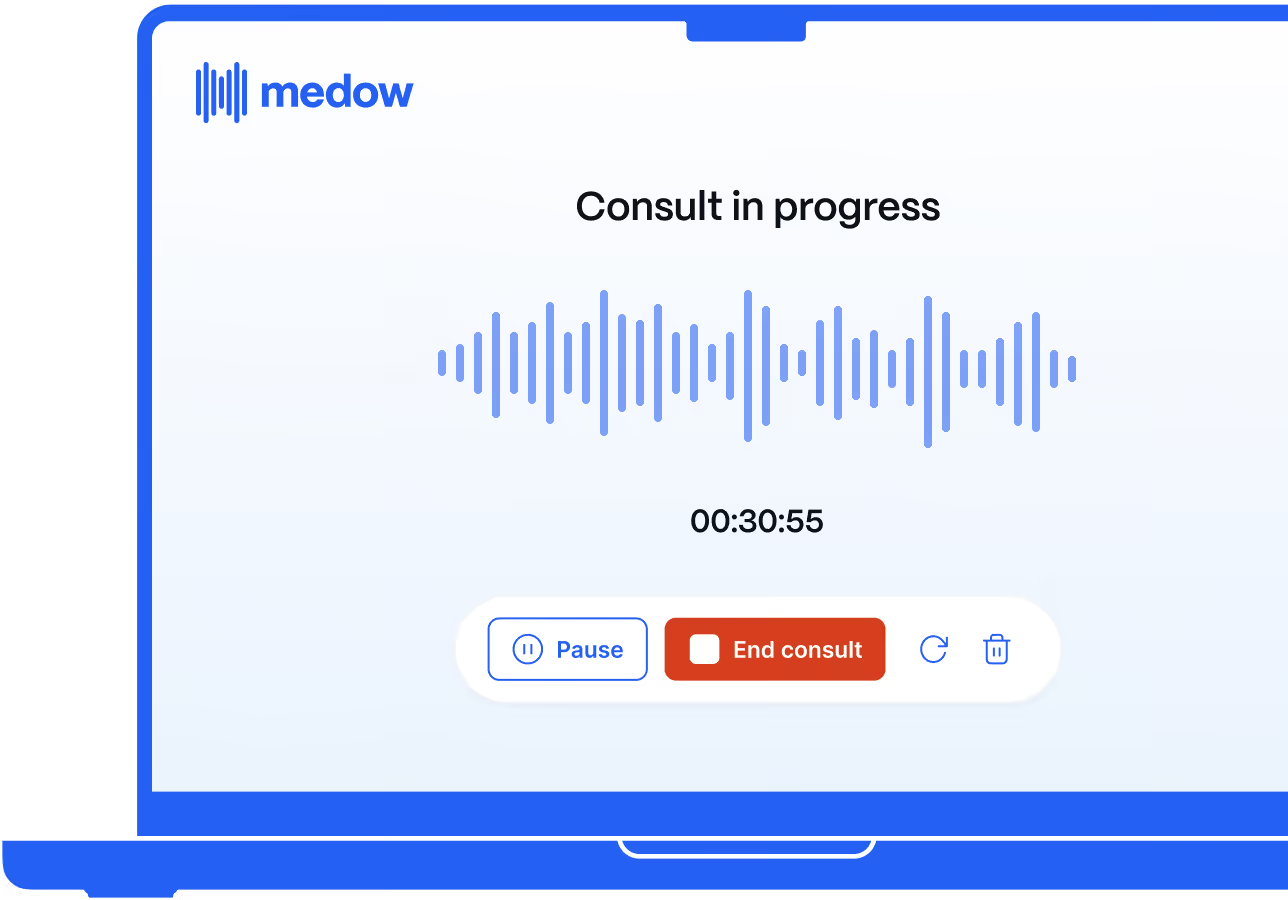
Continue with

Dragon Medical One and Heidi Health's AI Scribe sit at opposite ends of a single question: who decides what goes on the page, and in what order? Dragon transcribes literally — the doctor speaks every word and every comma, and Dragon writes down exactly that.
Heidi Health's AI Scribe takes the opposite approach: it listens to the consultation in the background and uses a general-purpose AI model to rewrite what was said into a structured note. Both save time, in different ways, with different trade-offs.
Medow Health takes a third path. Medow's Smart Dictation is built on a simple promise: stop needing punctuation, stop editing transcripts and stop waiting for a typist. The doctor speaks the letter naturally — at their own pace, without spoken commas or full stops, without flattening their accent — and a Specialist-grade AI model trained per specialty keeps every word verbatim, assigns each sentence to the correct section of the letter, applies punctuation and formatting, and syncs the finished letter into the PMS in seconds.
This is the difference between dictation, AI scribing, and Smart Dictation — and the reason most Dragon users who try Medow describe it as the best of both worlds: the verbatim accuracy and control of dictation, with the structural intelligence and integration of an AI scribe.
This comparison covers what matters most for Australian specialist clinics: how each tool handles the actual mechanics of producing a letter, depth of APAC PMS integrations, security, and onboarding support. Medow also competes directly with the third option many specialists still use — a human typist — at a fraction of the cost; that comparison sits alongside the dictation-vs-AI-scribe question for any practice still typing dictated audio by hand.
Whilst Heidi has a general dictation solution where you can add text to things like email and other locations, it does not generate a consult letter, so it has not been included in this comparison
Dragon is verbatim transcription only — your words, no structure, spoken punctuation required. Heidi Health's AI Scribe is the opposite — the AI rewrites the consult into its own structured note. Medow's Smart Dictation is the middle path: your verbatim words, with a Specialist-grade AI placing each piece into the right section of the letter, handling formatting, and syncing into Genie, Gentu, Elixir or Meditech automatically. For Australian specialist clinics, it's the dictation workflow Dragon users already trust, with the AI doing the work that Dragon makes them do by hand.
All three tools cut documentation time. The differences that matter for specialist clinics come down to how each platform treats the doctor's voice — who chooses the words, who chooses the structure — and the supporting layers around that core decision: APAC PMS integrations, security and hosting, and the level of setup and human support provided.All three platforms reduce the time clinicians spend on documentation. The differences that matter for specialist clinics come down to four areas: the technology behind the output, the range of reports and letters produced, the depth of APAC PMS integrations, and the level of setup and support provided.
Dragon Medical One is verbatim speech recognition. The doctor dictates with a microphone or the PowerMic Mobile app, speaks every full stop, comma and new paragraph, and Dragon writes down precisely what was said into whatever Windows application or PMS the cursor is in. Dragon's personalised vocabulary adapts to an individual doctor's voice over time. What it does not do: assign your dictation to the right section of a letter, generate any content beyond what you said, or know what a referral letter is supposed to look like.
Heidi Health's AI Scribe works the other way. It records the consultation in the background and then uses a general-purpose AI model to generate a structured note at the end. The doctor reviews and edits where needed. This is paraphrased AI output — Heidi decides which moments of the consult belong in which section, in language the model chooses. Heidi adapts to clinician preferences through templates and feedback, but the underlying model is the same whether the doctor is a cardiologist or a psychiatrist.
Medow's Smart Dictation combines the verbatim accuracy of Dragon with the structural intelligence of an AI scribe. The doctor speaks the letter naturally — at normal pace, with no spoken punctuation and no formatting commands. Medow's Specialist-grade AI keeps your exact words, decides which sentences belong under History, Examination, Impression, Plan, and so on, applies punctuation and formatting, and syncs the finished letter into the PMS. The dictation control specialists value is preserved. The structural, formatting and integration work Dragon makes them do by hand is removed.
Dragon writes down your words but does nothing else. Heidi Health's AI Scribe rewrites what was said into its own structured note. Medow keeps your verbatim words, applies a specialty-trained AI to assign them to the right section of the letter, and handles formatting and PMS sync. You don't lose control of the letter; you stop doing the structuring work.
No 'comma', 'full stop', 'new line' or 'new paragraph' commands. Pause to think. Restart a sentence. Loop back and qualify. Medow keeps up with how specialists actually talk through a letter — and the AI does the punctuation and paragraphing afterwards. This is the single largest measurable speed difference vs Dragon, which forces the doctor to dictate punctuation explicitly and slowly.
The Smart Dictation workflow mirrors what specialists already do — dictate the letter, then send it — with the manual structuring and integration work removed:
If the AI is going to take what the doctor actually said and decide which section of the letter it belongs in, the model has to understand how a specialist letter is structured. A cardiology letter is structured differently from a rheumatology letter, which is structured differently from a gastroenterology letter — and a referring GP expects each one to look the way that specialty writes.
Medow runs a dedicated Specialist-grade AI model for each medical specialty. The model is what decides that a verbatim sentence about chest discomfort and exercise belongs under Presenting Complaint rather than Impression, that a verbatim sentence about a medication change belongs under Plan rather than History, that a verbatim sentence about a referral request belongs in its own section addressed to the GP. A general-purpose model can guess at this and get it right some of the time. A specialty model is right far more often, which is the difference between a letter that needs polishing and a letter that needs rewriting.
The same specialty model also handles three problems Dragon and general-purpose AI scribes both struggle with:
Every specialty has its own vocabulary, abbreviations and letter conventions. Generic speech-to-text knows none of it. Medow runs a Specialist-grade AI model per specialty — the model is what decides which of your dictated sentences belongs in which section of the letter, in the format that field expects a referring GP to read.
Lookalike/soundalike disambiguation is one of the highest-stakes problems in clinical dictation. Medow's specialty model uses surrounding clinical context to choose the right term inside your verbatim transcript — and anti-hallucination passes verify the final letter against what was actually said. If it wasn't said in the room, it doesn't make it to the page.
Medow's specialty AI is tuned for Australian and New Zealand practices. It recognises how doctors refer to local hospitals ("the SAN" for Sydney Adventist Hospital in Wahroonga, "the Alfred", "the PA"), Australian patient names that Dragon routinely mis-spells, Australian medication brands, Medicare item numbers, and college-specific terminology. Doctors do not need to tone down their accent
Dragon users typically dictate, then cut and paste the result into the PMS, then re-apply font, size, justification and any required formatting before sending. Every letter. That post-dictation work disappears with Medow.Medow's integrations are built specifically for the APAC specialist and hospital PMS landscape: bi-directional API connections with Genie, Gentu, Elixir and Meditech. Appointments arrive automatically. Completed letters return to the patient record automatically. Genie syncs every 10 minutes; Gentu syncs minute-to-minute. Hospital doctors using Meditech can search patients by room number and push notes directly into the EMR during ward rounds.
Medow is built for the hospital security review, not retrofitted to pass one. Data hosted in Australia. De-identified before AI processing. Configurable retention. ISO 27001 certified.
Dragon Medical One is purchased through an Australian reseller and typically includes a one-hour remote installation, with ongoing technical support from the reseller. The personalised vocabulary develops over time as the doctor uses the system. There is no pre-launch configuration of letter templates or tone.
Heidi Health is self-serve on the Clinician plan. Clinicians sign up, configure templates and the system adapts through use. There is no local team configuring outputs before go-live. Enterprise customers receive more hands-on rollout support.
Medow provides a dedicated Customer Success Manager who configures templates, tone, letterheads and integrations before the clinic goes live. Smart Dictation is calibrated to the doctor's voice and section preferences from the first consultation, not after weeks of self-configuration. After launch, the CSM stays involved and refines outputs based on feedback.
Most clinicians searching for "Dragon Medical One vs Heidi Health's AI Scribe" are not picking between two unfamiliar tools. They are dictation-fluent specialists who have been using Dragon for years and are asking whether AI documentation has reached the point where switching is worth it. Others are evaluating both for the first time and want to understand the fundamental differences before committing.
Dragon has been a trusted platform in Australian specialist clinics for over two decades. Its accuracy and reliability for active dictation into Windows-based PMS systems are well established. For clinicians with highly structured dictation workflows, it continues to deliver value — within the limits of what verbatim transcription, on its own, can do.
This comparison also includes Medow because it changes the underlying question. Instead of asking "verbatim dictation or AI scribing?", Medow's Smart Dictation lets specialists keep verbatim dictation and gain AI structuring. The comparison is written to help specialist clinicians decide which model — verbatim only, AI-paraphrased, or verbatim plus AI structure — fits their practice.
Dragon Medical One is a cloud-based speech recognition platform developed by Nuance Communications, now a Microsoft company. It has been used in Australian specialist clinics for over two decades and is the benchmark for active, verbatim dictation in clinical settings. The platform converts speech to text in real time, requires no voice training at first use, and operates through a floating dictation interface that works with any Windows application or PMS.
Dragon is hosted on Microsoft Azure with Australian data centre options and ISO 27001-certified infrastructure. The personalised vocabulary adapts to the individual clinician's voice and specialist terminology over time. Clinicians can create custom voice commands and macros for repetitive tasks.
What Dragon is not is an AI medical scribe and not a structural-AI tool. It does not listen passively, does not generate structured content from a transcript, and does not assign dictated speech to letter sections. The output is exactly what the doctor dictated, in the order they dictated it.
Dragon Medical One pricing in Australia varies by reseller and subscription tier. Indicative pricing from Australian resellers:
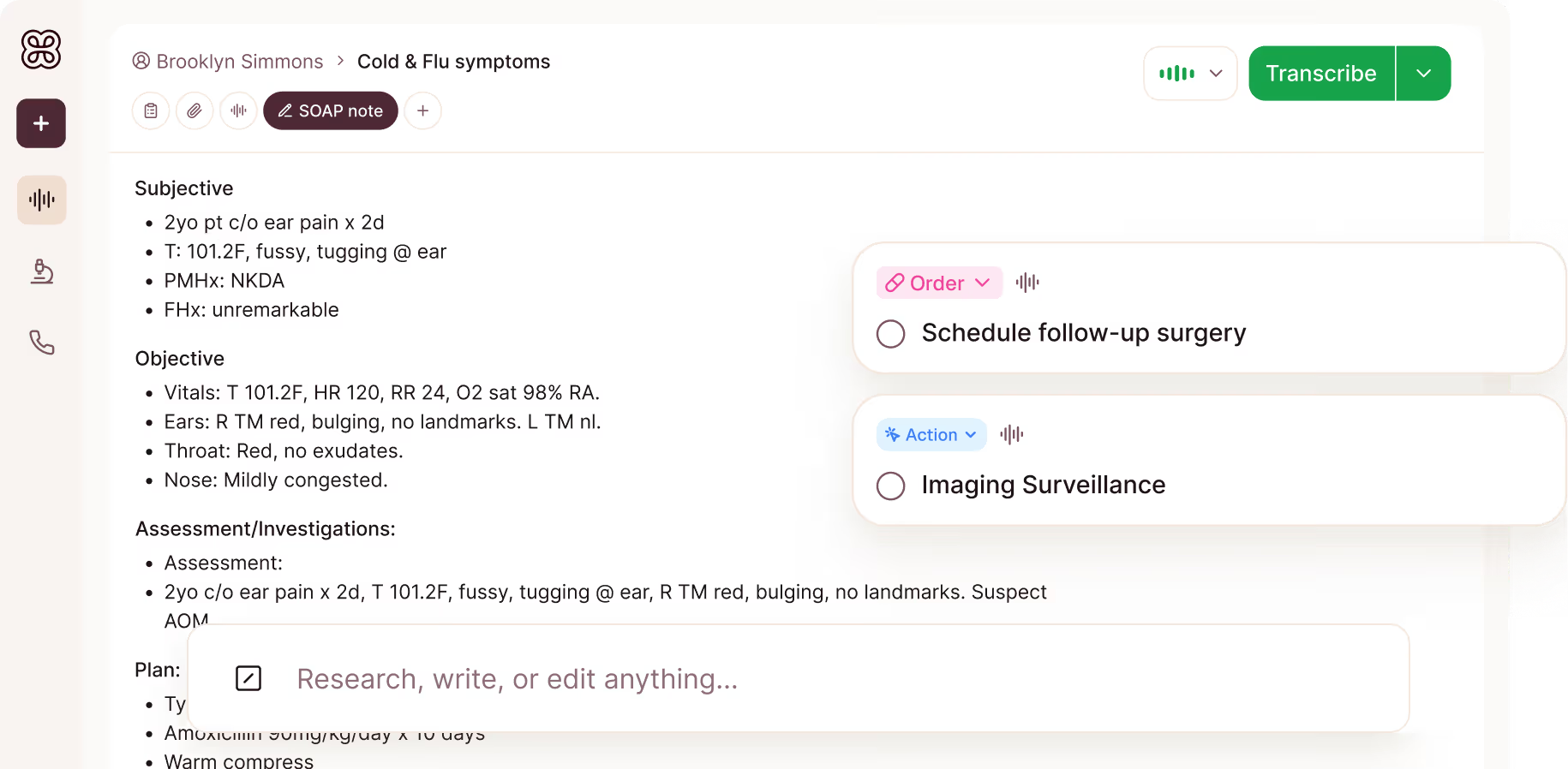
Heidi Health is an AI medical scribe founded in Melbourne, now used in around 190 countries and supporting more than 100 languages. The platform records the consultation in the background, and a general-purpose medical AI model generates a structured note at the end. The doctor reviews and edits where needed. Heidi Health's AI Scribe adapts to clinician preferences through templates and feedback over time, but the underlying model is the same regardless of specialty — a cardiologist and a psychiatrist use the same model configured differently.
The relevant trade-off for specialist clinics: Heidi's AI Scribe rewrites what was said. It does not preserve verbatim dictation; it generates its interpretation of the consult. For specialists with strong dictation habits and a clear sense of how their letters should read, that interpretive step is what creates editing work.
Heidi Health pricing (approximate, AUD):
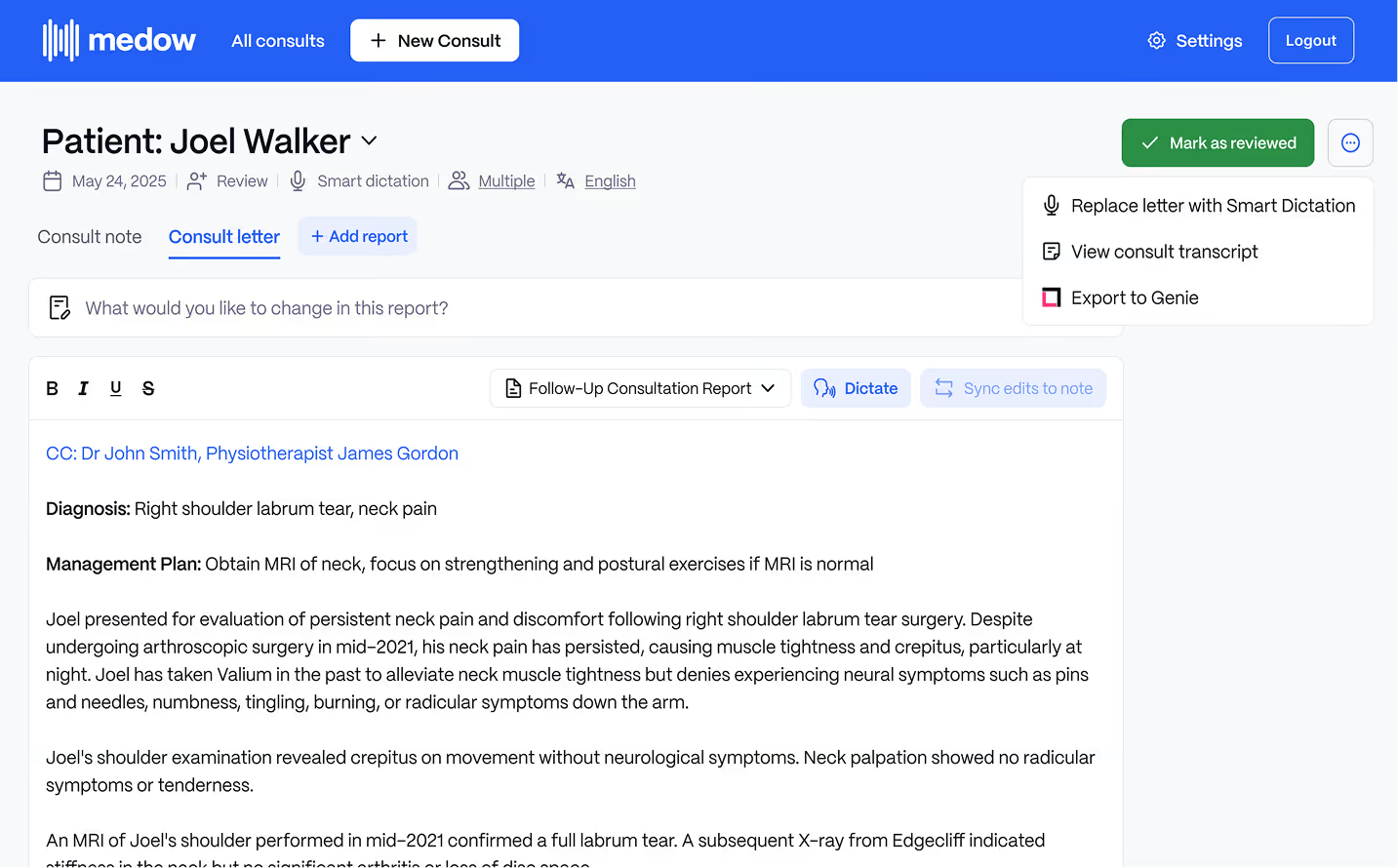

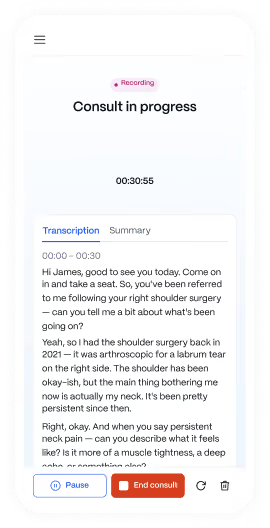
Medow Health is a smart medical dictation platform built specifically for specialist doctors in private practice and hospital settings across Australia, New Zealand and Singapore. The headline workflow is Smart Dictation, and the design idea behind it is simple: doctors don't want their words rewritten. They want them written down faster, organised correctly, and put in the right place in the patient record.
In a Smart Dictation session, the doctor speaks the letter naturally — at their normal pace, with no spoken punctuation and no formatting commands. Medow's Specialist-grade AI keeps the doctor's verbatim speech intact and then performs three jobs Dragon does not do and an AI scribe does too aggressively:
The output is the doctor's letter, in the doctor's words, organised the way that specialty writes — and ready to sign in minutes rather than the typical Dragon turnaround of "dictate, cut and paste, re-format, then send".Smart Dictation is the headline mode. The same platform also offers full ambient AI scribing for clinicians who prefer not to dictate at all — same specialty-trained AI, same anti-hallucination checks, same PMS sync. Practices are not locked into one mode.
Medow's Voice Profile feature lets specialists upload three of their existing letters; Medow builds a Voice Profile and every future report and letter reflects that doctor's individual phrasing, structure and clinical preferences. Nothing in the ANZ market currently does this at the same depth.
Medow's integrations are built specifically for the APAC specialist PMS landscape: bi-directional API connections with Genie (10-minute sync), Gentu (minute-to-minute), Elixir and Meditech. Appointments arrive automatically. Completed letters return to the patient record automatically. Hospital doctors can search patients by room number and push notes into Meditech in real time during rounds.
Unlike the self-serve model offered by most AI scribes or the reseller-managed setup of Dragon, Medow provides a dedicated Customer Success Manager who configures templates, tone, letterheads and integrations before the clinic goes live.
Medow does not publish pricing publicly, but offers a 60-day money-back guarantee. Clinics book a demo, which provides a personalised quote based on the usage, specialty, and size of the practice. All pricing is inclusive with no hidden costs.
The most useful question for specialist clinicians evaluating documentation tools is not how fast the output is generated, but who decides what goes in the letter — and how well the system understands the way specialists think, document and communicate.
Dragon Medical One does not need to understand the specialty. It transcribes what the doctor said. A specialist who dictates precisely produces precise output. The tool does no organising, so the doctor remains responsible for every structural decision.
Heidi Health's AI Scribe approaches specialty understanding through templates and feedback. Clinicians can configure how notes are structured for their field, and the model learns preferred phrasing over time. Template customisation does not, however, teach a general-purpose model how a gastroenterologist thinks differently from an orthopaedic surgeon when writing a referral letter. Clinical hierarchy — what to include, in what order, with what level of detail — is specialty-specific knowledge that a global model cannot fully replicate from templates alone.
Medow's Specialist-grade AI models are trained on this hierarchy per specialty. Once the doctor dictates the letter verbatim, the specialty model is what assigns each sentence to the right section, applies the formatting that field expects, and uses specialty context to resolve ambiguous medical terms. Add Voice Profile and the letter also reflects the individual doctor's writing style. For specialists whose letters go to GPs and other specialists, the gap between a specialty-trained verbatim-plus-structure model and either a verbatim-only or a paraphrasing model is meaningful.
The clinician opens the patient record in the PMS, positions the cursor in the relevant field or template, and dictates into the PMS using a microphone or the PowerMic Mobile app. Dragon converts speech to text in real time, directly into the PMS. For letters, the doctor dictates the full letter content, including spoken punctuation and structural cues. A secretary may review and correct the dictated text. The workflow is manual but fast for clinicians with established dictation habits.
The clinician starts a session, Heidi Health's AI Scribe records and transcribes the consultation, and a general-purpose AI model generates structured notes or letters at the end. For Best Practice and MediRecords users on a paid plan, integration is available. For APAC specialist PMS systems, integration depth is limited and documentation is typically completed in Heidi and entered into the PMS separately.
In Smart Dictation mode, the doctor speaks the letter naturally — at normal pace, no spoken punctuation. Medow keeps the verbatim transcript, distinguishes speakers when needed, flags any low-confidence words against specialist medical dictionaries, and the specialty AI assigns each sentence to the correct section of the letter. Punctuation, paragraphing and formatting are applied automatically. Anti-hallucination passes verify the final letter against the verbatim transcript.
The completed letter is reviewed and approved via a Mark as Reviewed action that simultaneously syncs the document into the connected PMS or EMR. Gentu users sync minute-to-minute; Genie users every 10 minutes. Hospital doctors using Meditech can search patients by room number and push notes into the EMR in real time during rounds.
Ambient AI scribing is available on the same platform for clinicians who would rather not dictate — Medow records the consult, distinguishes speakers, and the specialty AI generates the letter from the conversation. Practices can move doctors between modes without switching tools.
For specialist clinics, PMS integration determines whether a documentation tool saves time across the full workflow or simply replaces one manual step with another.
Dragon works with any Windows-based PMS via a floating dictation interface that injects text at the cursor position. Compatible systems include Genie, Gentu, Best Practice, Shexie, Medical Director and Zedmed. This is not a bi-directional integration: appointments do not sync automatically, completed letters are not pushed to the patient record via API, and the doctor still cuts and pastes (and frequently re-formats) the finished letter before sending. Dragon runs natively on Windows; Mac users require the Helium add-on subscription for native macOS support.
Heidi integrates with Best Practice and MediRecords in Australia on paid plans. Push-to-chart integrations with major EHRs (athenahealth, Epic, eClinicalWorks) are gated to the Enterprise plan. For Genie, Gentu and Elixir users, integration is limited and primarily designed for GP rather than specialist workflows. For APAC specialist PMS users, documentation is typically completed in Heidi and entered into the PMS manually.
Medow's integrations are built specifically for the APAC specialist and hospital PMS landscape. Bi-directional API connections with Genie, Gentu, Elixir and Meditech allow appointments, patient demographics and completed reports and letters to sync automatically without manual re-entry. Unlike a floating interface or widget overlay, Medow's connection is embedded in the workflow: letters sync directly into the patient record once approved. For hospital doctors, the Meditech integration supports real-time documentation during ward rounds with notes searchable by room number. For a full overview of every integration Medow supports, see the AI Medical Scribe page
Clinicians evaluating Dragon Medical One and Heidi Health are typically asking one of two questions: is it time to move beyond verbatim dictation to AI-assisted documentation, or is there an AI scribe that understands specialist workflows well enough to replace the current system?
Dragon is a trusted, proven tool. For specialists who have refined their dictation practice over years and whose workflow depends on precise, immediate text entry into a Windows-based PMS, it continues to deliver consistent value within the limits of what verbatim transcription, on its own, can do.
Heidi Health is the stronger option for GP workflows, particularly in Best Practice environments, and for clinicians wanting a free-tier entry point to test AI scribing. Its multilingual capabilities and international reach are genuine advantages for practices serving diverse patient populations.
For specialist clinics where reports and letters need to reflect specialist clinical reasoning, where the PMS is Genie, Gentu, Elixir or Meditech, and where getting the system right from day one matters, Medow is built for exactly that context. Smart Dictation keeps the doctor's verbatim words and lets a specialty AI do the structuring — the work Dragon makes them do by hand and that an AI scribe takes over entirely. Bi-directional PMS integration means letters enter the patient record automatically. The dedicated Customer Success Manager means the system produces the right output from the first consultation. Voice Profile means every letter sounds unmistakably like the doctor. And the 60-day money-back guarantee means there is no risk in finding out.
For a broader view of the market, our guide to the best AI medical scribes in Australia covers all the main platforms side by side. You can also compare all AI medical scribes in our comparison hub, or if you are also weighing up Heidi and Lyrebird, see our dedicated Heidi vs Lyrebird comparison.
The right platform depends on how your clinic produces documentation today and where the biggest gaps in quality and efficiency are.
If documentation quality, PMS integration, and a system configured correctly from day one matter to your specialist clinic, book a demo to see how Medow performs for your specific specialty and workflow.
Dragon is verbatim speech recognition: the doctor speaks every word and every comma, and Dragon writes down exactly that. Heidi is AI scribing: the AI records the consultation and writes its own structured note, in its own words. Medow's Smart Dictation combines the two — the doctor speaks the letter naturally without spoken punctuation, Medow keeps the verbatim words, and a Specialist-grade AI assigns each sentence to the right section of the letter, applies formatting, and syncs into the PMS. Dragon gives the doctor full control but no help. Heidi gives full help but no control. Smart Dictation gives both.
Yes — and that's the most common reason Dragon users move to Medow. Doctors who have been dictating for years are good at it: they know exactly what belongs in a letter, how long it should be, and the structure their referrers expect. Smart Dictation preserves that control. The doctor speaks the letter, the AI handles everything around the dictation that slows the workflow down — spoken punctuation, name spelling, drug names, local hospital references, section assignment, formatting and PMS sync. Full AI scribing is the other extreme, useful for clinicians who would rather not dictate at all, but it can produce letters that are too long, too compact or off-format for the specialty. Smart Dictation sits between the two, and unlike Dragon, Medow can switch a doctor to ambient AI scribing on the same platform if and when they want to.
Specialists switching from Dragon typically report cutting per-letter time by roughly half once they're up to speed — natural speech, no spoken punctuation, fewer name and drug-name corrections. The bigger win is end-to-end: Medow's bi-directional integration with Genie and Gentu removes the cut/paste, font fix, justification and re-format steps Dragon users still do today, syncing the formatted letter into the patient record directly. Total time per letter, from speaking to sent, drops further than the dictation time alone suggests.
Medow keeps your verbatim dictation. The Specialist-grade AI does not paraphrase — it takes the words you spoke and assigns them to the right section of the letter, applies punctuation and formatting, and verifies the output against your transcript via multiple anti-hallucination passes. The result is your letter, in your words, organised the way that specialty's letters are organised. This is the structural difference vs Heidi and other ambient AI scribes, which rewrite the consult into the model's own language.
No. Dragon converts speech to text but does not generate or structure content. The doctor must dictate the full content of every letter or referral and decide where each sentence belongs. If generating structured letters from a dictation (or a recorded consultation) without doing the structural work by hand is the goal, an AI documentation platform such as Medow is designed for exactly that workflow.
The answer depends on the specialty and the PMS the clinic runs. For clinics using Best Practice or wanting a low-cost entry point, Heidi is worth evaluating. For clinics using Genie, Gentu, Elixir or Meditech who need verbatim dictation kept intact, AI section assignment trained for their specialty, and bi-directional PMS integration from day one, Medow is built for that context. The dedicated Customer Success Manager and 60-day money-back guarantee reduce the risk of switching.
Dragon transcribes verbatim and stops there. Medow's Smart Dictation also keeps your dictation verbatim — but then uses a Specialist-grade AI model to assign your dictated sentences to the correct sections of the letter, apply punctuation and formatting, and sync the finished letter into the PMS. The doctor does not speak punctuation, does not arrange the letter structure manually, and does not cut and paste afterwards. Medow also offers ambient AI scribing on the same platform for clinicians who prefer not to dictate at all, so practices are not locked into one mode.
Yes. Medow offers a 60-day money-back guarantee, so specialist clinics can get started without financial risk. Book a demo to receive personalised pricing and see the platform in action for your specialty.