Continue with

Dr Adam Greenbaum runs his own plastic and skin cancer surgery practice in New Zealand.
Before Medow, every letter was dictated, sent to an external typist and returned three to five days later. When it came back, Adam still had to review, edit, convert to PDF and upload it to the patient record before it could be sent.
The consultation might have finished, but the work it created had only just begun.
With Medow, the letter is drafted in seconds and moves directly into Elixir once reviewed. What previously took several days can now be completed before the patient leaves the practice.


Dr Adam Greenbaum is a plastic surgeon with a particular interest in skin cancer surgery. After completing his specialist training in the UK, he relocated to New Zealand, where he now runs his own practice.
Adam sees 50 - 60 patients each week across his plastic surgery and skin cancer work. Alongside consultations, he performs procedures under local anaesthetic and runs a weekly general anaesthetic operating list.
That creates a steady flow of documentation: GP letters, insurance pre-approvals, pathology follow-ups and clinical correspondence that needs to be accurate, reviewed and sent without delay.
For years, every one of those letters depended on the same external typing process.
Before Medow, Adam dictated each letter and sent the recording to an external typist.
The typed document usually returned three to five days later. Only then, he would review the consultation, make changes in Word, convert the document to PDF, upload it to the patient record and prepare it to be sent.
For a standard consultation, Adam estimates that this final review and administration took between 10 and 20 minutes. Complex cases took longer.
Across around 55 patients a week, the work did not build up occasionally. It was built into the workflow.
Every consultation created a second task that could not be completed that day. Letters sat with the typist. Documents returned in batches. Pathology correspondence and insurance approvals joined the queue.
The issue was not simply the time spent dictating. It was the delay between seeing the patient and finally being able to close the work.
Medow changed that by removing the external typist from the workflow.
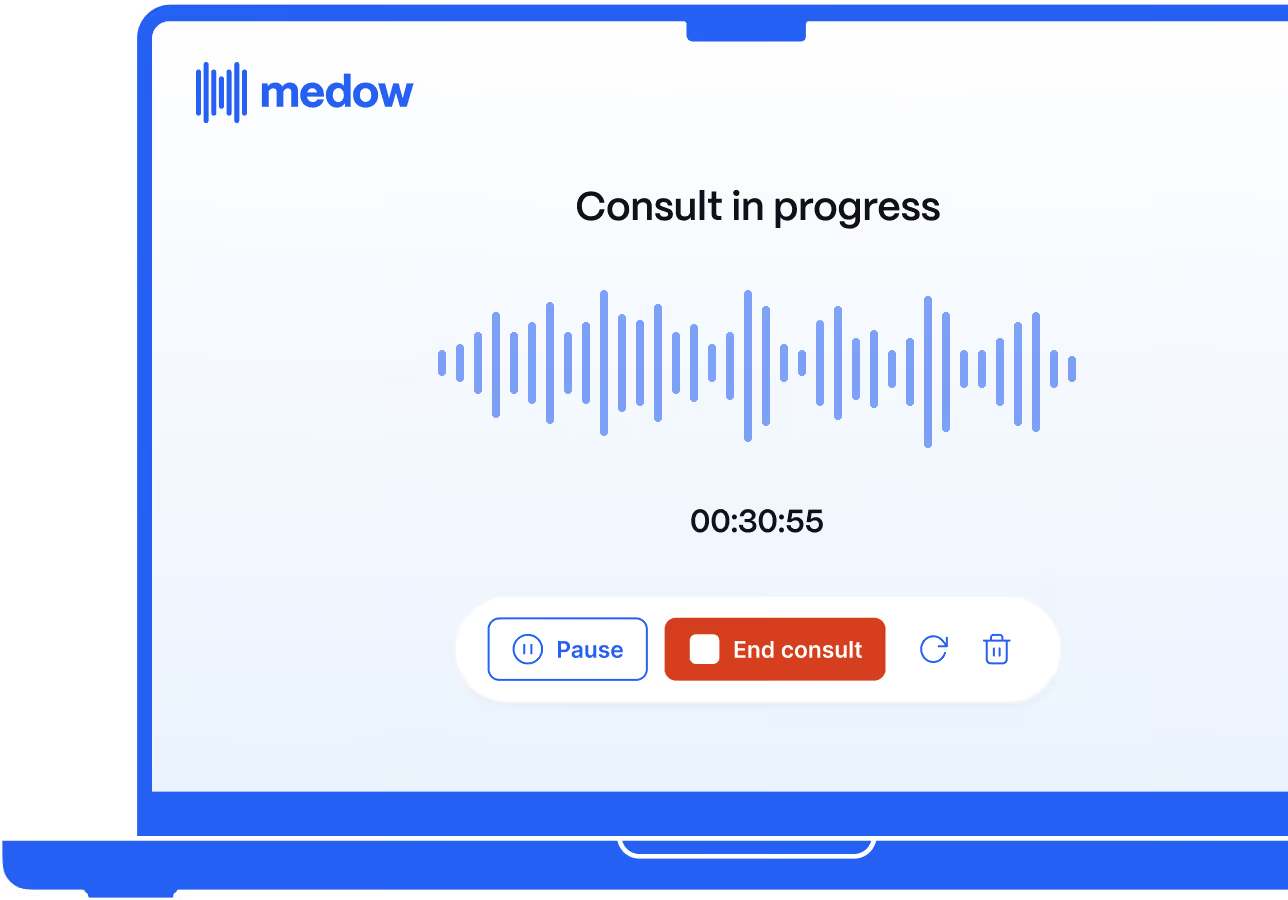
Instead of dictating a letter, sending it away and returning it several days later, Adam now generates the first draft during or immediately after the consultation.
In 20 to 50 seconds, the letter is structured around the conversation that has just taken place and ready for review.
Once Adam approves it, the letter moves directly into Elixir, ready to be filed and sent.
There is no audio to send away. No document to wait for. No Word file to rework several days later. No PDF to create manually.
A process that previously moved from Adam to a typist and back again can now be completed while the consultation is still fresh.
The workflow does not stop once Medow has generated the letter.
After Adam reviews and approves it, the document moves directly into Elixir, ready to be filed and sent. There is no exporting, reformatting or manually transferring information between systems.
That means the letter can move from consultation to completed correspondence within the same clinic workflow.
The difference was clear from Adam’s first day using Medow. One patient received their letter while they were still standing at reception.

The patient was still at the front desk talking to my receptionist when the letter had already gone.
The same applies to insurance pre-approvals. Instead of waiting three to five days for a typed document to return before reception can act, the correspondence can now be reviewed and sent through Elixir immediately.
For the patient, that means faster communication. For the practice, it means fewer handovers, less follow-up and no additional admin once the letter has been approved.
The biggest difference is not just that Medow drafts the letter in seconds. It is how much work disappears afterwards.
There is no backlog of typed letters waiting for review. Adam no longer needs to return to consultations and refocus several days later to finalise the correspondence. Reception spends less time chasing insurance documentation that is still sitting somewhere in the process.
Adam estimates that Medow saves him around 18 minutes per patient and believes even that may be conservative.
Across around 55 patients a week, those minutes become hours.
Hours that are no longer spent reopening old consultations, editing returned documents or clearing a queue at the end of the day.
Before Medow, Adam’s last patient was rarely the end of his working day.
Letters still had to return from typing, be reviewed and finalised. He would often remain at the clinic as late as 7pm.
Even after leaving, there was still the knowledge that more correspondence was waiting to come back.
Now, documentation is completed as part of the clinic day itself. Adam leaves just after 5pm with no backlog waiting for him and nothing left to finish at home.
When I go home each evening, my work's done.
The difference is not only an earlier finish. It is being able to leave the clinic mentally as well as physically.
His family has noticed.
My family's getting quite bored because they actually see me.
What began as a change to the documentation workflow has changed the end of Adam’s day: fewer late evenings, no letters following him home, and more time present with the people waiting for him there.
Moving away from a long-established dictation and typing process needed to be straightforward.
Adam described Annie, his dedicated Medow Customer Success Manager, as “superb” and “very helpful” throughout setup.
Having a direct point of contact meant questions could be resolved quickly and the workflow could be adapted around the way his practice already operated.
For a specialist running his own practice, that support meant the transition did not become another project to manage or another burden for the clinic team.
Adam’s experience shows that replacing an external typing service does more than shorten the time required to produce a letter.
It removes the delay between the consultation and the completed correspondence. It reduces administration for the specialist. It allows reception to act sooner. It gives patients and referrers faster communication.
And at the end of the day, it means the work generated in the clinic stays in the clinic.
It's made a difference specifically to me, but to everyone around me as well.
For specialists still working through a dictate-and-wait process, the comparison is simple: letters that once returned several days later can now be reviewed, filed and sent before the patient leaves the practice.
Still waiting three to five days for typed letters to come back?
See how Medow helps specialist practices complete documentation faster and reduce admin.