Continue with

A high-volume Sydney dermatology practice where the letters are now written during the consult, not dictated after it.


Before Medow, five o'clock would roll around, and the dictating would start. Every letter from the day's clinic, recorded at the end of it, sent away, and returned two days later for review. By then Prof Dedee Murrell had seen another fifty patients, and the notes coming back were about someone she could no longer quite place.
Today the notes and the letters are generated during the consultation. She reviews and approves them on the train home so that she can enjoy her evenings doing the things she loves.
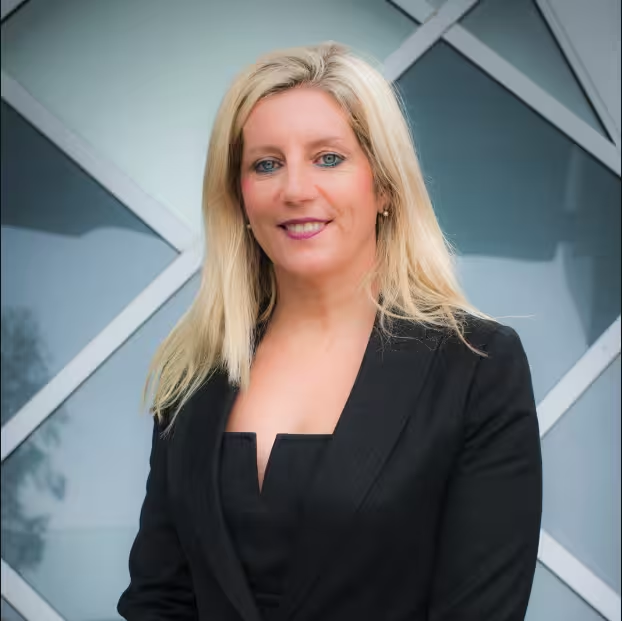
Prof Dedee Murrell runs a Sydney dermatology practice with six consulting rooms. On a clinic day, three to four research fellows work alongside her, assessing every patient before they are seen by Prof Murrell.
Her private clinics run on two to three afternoons a week and the rest of the week belongs to daily hospital on-call, research meetings and clinical trials. Those few sessions are all the private practice time she gets, so none of it can be spent on paperwork.

I'm trying to maximise my private practice productivity, because I don't have the luxury of sitting here all day long every day.
The clinical work finished when the patient left. The documentation did not.
Notes were typed during the consult, letters were dictated at the end of the day and came back typed around forty-eight hours later, at which point she had to reconstruct the patient from memory in order to review them. For the fellows, it meant staying back after clinic, or logging in from home to finish the workload.
The change she describes is not a faster version of the old process. The dictate-and-wait loop is gone entirely.
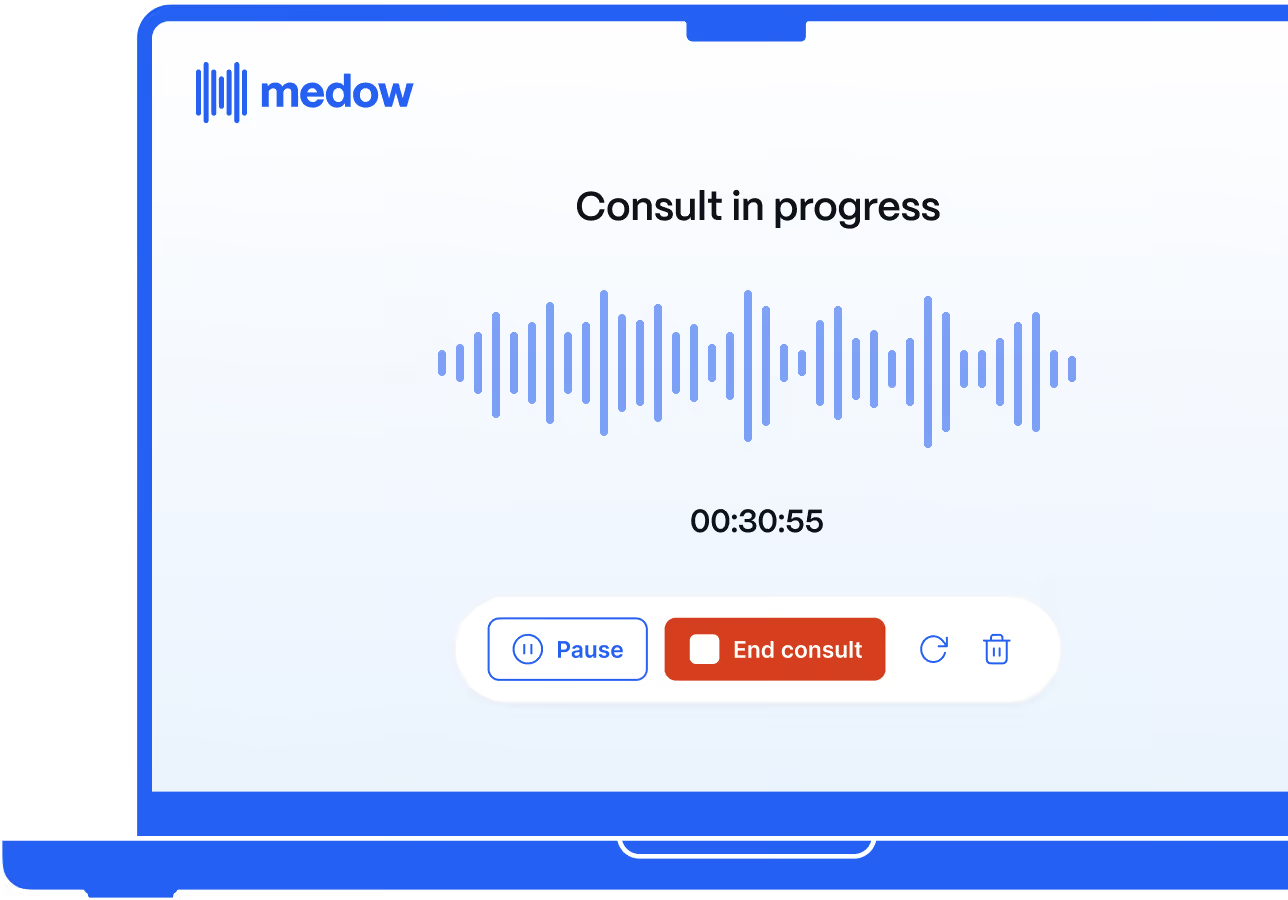
Notes and letters are generated at the same time. If a referral needs to go to another specialist, that can be dictated in the moment too, rather than added to the pile waiting at 5pm.
It all happens in real time... [we] can spend more time looking at the patient and making eye contact.
She estimates fifteen to twenty minutes saved per consultation. On her own assessment of the output:
It really is great as far as how you've created the notes, how you've created the letters.
Prof Murrell has run an American-style teaching clinic for years. Patients are roomed and seen first by the fellows, who take the history and then present to her before she sees the patient herself. New and complex patients are deliberately booked against shorter follow-ups so the rooms keep moving.
That model predates Medow. What changed is what it costs the people running it. The fellow taking the history is no longer typing it, and no longer dictating letters after hours.
Instead of trying to understand all the complicated things that have gone on before, [Medow] is listening to that and summarising it in a logical sequence.
Nothing about how she teaches or how she books her list had to change to make that work.
As with any new tech, Prof Murrell expected the system to be more complicated than it turned out to be. Isabel, her Customer Success Manager, set the practice up at the beginning with in-person and online sessions, and it has needed very little since. Knowing Isabel is there when something comes up is the part she counts as a bonus rather than a necessity.
The app opens easily on her phone, which is how she gets to it between rooms and on the way home. The letters still come to her. She approves them, edits where she wants to, and does it on the train while heading home, instead of being held back in her rooms after hours.
Still dictating at the end of clinic and waiting days for letters to come back?
See how Medow Health can transform your practice. Book a demo at medowhealth.ai