Continue with

One psychiatrist, a two-tool workaround, and what changed when the whole letter arrived in one pass.
Dr Anoek Dechering would squeeze typing in between appointments, and finish the rest long after the last patient left. Six hours of face-to-face consults. Eight or nine patients, four different consultation types, and a letter owed to a referrer for every one of them. The typing ran about four hours.


Nova Mentem is a private psychiatry clinic in New Zealand. Dr Anoek Dechering is the psychiatrist. Her husband, Dr Paul Dechering (PhD), is the General Manager. He looks after correspondence closely.
She runs four consultation types, and each produces a letter.
It began as a fully manual process. Notes during the consultation, typed up after hours. Referrers expected correspondence the same day, so it got done, and the days got very long.
Anoek trialled a general-purpose AI scribe. It never quite fitted. Built to work across all of healthcare, it read to them as a GP tool rather than a specialist one, and it did not produce the letter they needed to send.

We experimented a lot... and we never got to a point that we were happy.
So they layered a second AI tool on top, copying the transcript across and generating the letter a paragraph at a time. It worked, in the sense that a letter came out the other end, but it meant moving text between tools for every patient. Documentation dropped to around three hours a day. Better. Not solved.
I was actively... searching for another tool, to find out what else is there that we can use.
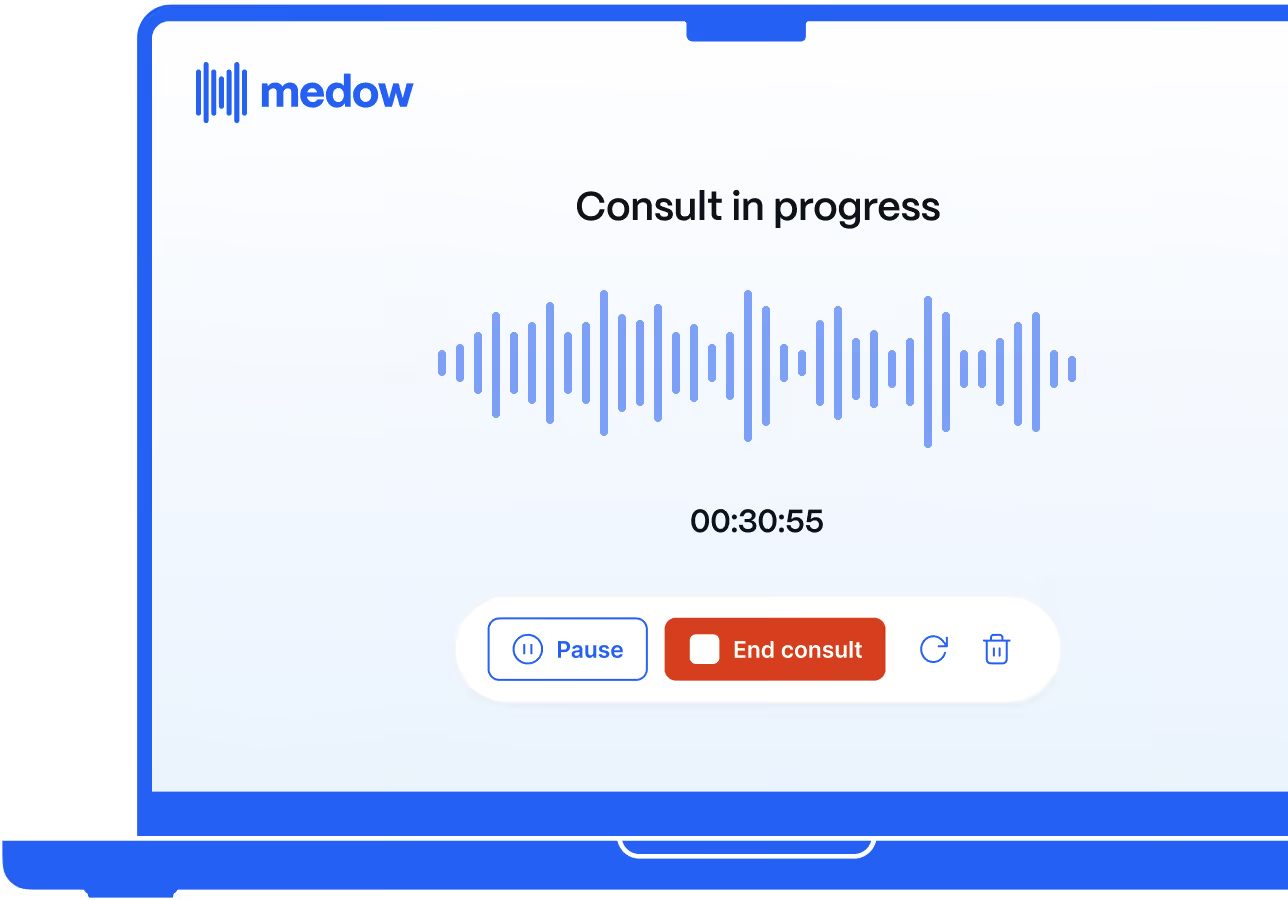
With Medow, the full letter arrives in one pass. There is no transcript to shuttle between tools and no paragraph-by-paragraph assembly. Detail from earlier consultations can be carried forward through Medow’s context box, so a review letter is written knowing what the full assessment found.
What Paul points to is the model underneath. Medow builds a dedicated AI model per specialty, with in-house doctors refining outputs.
It definitely can pick up the nuances... It can bring out so much more than just the hard facts. It's not just a transcription, it's an interpretation too.
The change inside the room matters too. Hands free, no note-taking, no attention split between the patient and the page. Psychiatry is about as sensitive as specialties get, yet consent has not been an issue for her patients. If anything, it works in patients’ favour because the psychiatrist in front of them is wholly focused on the session.
Anoek now spends five to ten minutes per consult, and that time is proofreading. Same-day letters, without the four hours.
She's often now saying to me, in a sort of surprised context, "I'm done for the day already. I'm coming home."
Rosanna, Nova Mentem’s Customer Success Manager, is quick to reach and understands how the clinic runs. When templates need adjusting, she is there.
Asked whether he would recommend Medow, Paul did not pause;
That's a no-brainer... [It's] a very supportive and time-saving tool.
Still writing specialist letters after the last patient has gone?
Book a demo at medowhealth.ai